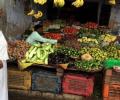
Fruits, vegetables and eggs continued to witness deflationary trend during January this year, with their prices declining 4.18 per cent, 13.32 per cent and 2.44 per cent, respectively.
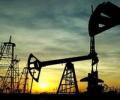
ONGC's net sales dropped to Rs 19,768.18 crore from Rs 22,616.32 crore in second quarter of last financial year.
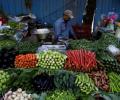
Retail inflation declined to a three-month low of 5.1 per cent in January, mainly due to subdued prices of vegetables, fruits and other food items, according to government data released on Monday. The fall indicates that retail inflation is inching towards the Reserve Bank's comfort level of 4 per cent. The Consumer Price Index (CPI) based inflation was on the rise for two straight months after touching a trough of 4.9 per cent in October 2023. In December, it stood at 5.69 per cent.

A pilot for daily revision of petrol and diesel price will be first implemented in Puducherry and Vizag in Andhra Pradesh, Udaipur in Rajasthan, Jamshedpur in Jharkhand and Chandigarh

Diesel price on Monday was hiked by 25 paise per litre -- the third increase since last week -- and more rate hikes for both diesel and petrol are in the offing in the coming days as international oil prices have soared to a three-year high. The price of diesel was hiked to Rs 89.32 per litre in Delhi and to Rs 96.94 in Mumbai, according to a price notification of state-owned fuel retailers. This is the second straight day of increase in diesel prices and the third since September 24 when the state-owned oil firms ended a three-week hiatus in rates.

In a major relief to cash-strapped airlines, jet fuel (ATF) prices were on Monday cut by a steep 4.3 per cent, the first reduction in rates in three-and-a-half months.
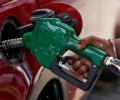
The fuel price hike for the last 16 days had caused inconvenience and disappointment among the general public.

Jio-BP, the fuels and mobility joint venture between Reliance Industries and UK's BP, on Thursday announced a partnership with BluSmart - India's first and largest all-electric ride-hailing platform - to set up a network of commercial large-scale EV charging stations. As part of the partnership, Jio-BP will set up these stations for passenger electric vehicles and fleets across the country, the company said in a statement. "Through this partnership, both companies will collaborate in planning, development and operation of EV charging infrastructure, at suitable locations across cities where BluSmart operates," it said.

Reliance Industries on Friday reported a 41.5 per cent jump in its third quarter net profit as oil, retail and telecom businesses fired on all cylinders. Net profit of Rs 18,549 crore in October-December compared with Rs 13,101 crore a year back, the company said in a stock exchange filing. Income from operations rose to Rs 1.91 lakh crore from Rs 1.28 lakh crore.
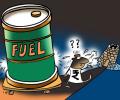
Diesel rates were cut by 40 paisa to Rs 68.89 a litre. With this, the reduction in rates in last six weeks totals Rs 9.26 per litre on petrol and Rs 7.2 per litre on diesel.

Public sector oil companies on Sunday slashed jet fuel or Aviation Turbine Fuel prices by 3.7 per cent, the tenth reduction since September. ATF prices in Delhi were slashed to Rs 29,158 per kilolitre, effective midnight tonight, an official of Indian Oil Corporation, the nation's largest fuel retailer, said. The fuel used by airlines till today was priced at Rs 30,288 per kilolitre. After today's Rs 1,130 a kilolitre reduction, jet fuel is priced at early 2005 levels.
.jpg)
Declining prices of food items like vegetables pulled down retail inflation to 5.59 per cent in July, bringing it back within the RBI's comfort zone after two months, official data showed on Thursday. The retail inflation based on the Consumer Price Index (CPI) had remained above 6 per cent during May and June. The government has mandated the RBI to maintain retail inflation at 4 per cent, with a margin of 2 per cent on either side. The CPI based inflation stood at 6.26 per cent in June 2021 and 6.73 per cent in July 2020.

PESO, an agency entrusted with the responsibility to ensure safety of public and property from petroleum products, said the vehicles used by the firm are not approved by it.
The retail inflation, which is factored in by the RBI to arrive at its monetary policy, has been on decline since last month. The previous low was 5.54 per cent in November 2019. The government has asked the RBI to restrict the inflation around 4 per cent, with a margin of 2 per cent on the either side.

Rates at different airports vary because of differential in local sales tax or value added tax.

'The government will take proactive steps to see that their participation in the equity market, especially in PSU stocks, is rewarding.'

The basket of crude oil India buys from overseas markets averaged $68.07 per barrel in September as against the August average of $71.98 a barrel.

Petrol and diesel prices on Friday touched an all-time high across the country after rates were hiked for the third consecutive day by 35 paise per litre each. The price of petrol in Delhi rose to its highest-ever level of Rs 106.89 a litre and Rs 112.78 per litre in Mumbai, according to a price notification of state-owned fuel retailers. In Mumbai, diesel now comes for Rs 103.63 a litre, while in Delhi, it costs Rs 95.62 per litre.
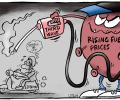
Petrol price on Thursday was hiked by 35 paise per litre and diesel by 15 paise, pushing rates to a new high across the country. Petrol in Delhi now costs Rs 101.54 a litre and diesel Rs 89.87 per litre, according to a price notification of state-owned fuel retailers. The increase comes after rates stayed mute for three days. Petrol price was last hiked on July 12, on a day when diesel rates had seen its first reduction in almost three months. The increase on Thursday neutralised the 16 paise price cut in diesel on July 12.

The wholesale price index-based inflation remained in the negative territory for the seventh straight month in October at (-) 0.52 per cent, on easing prices of food items. The WPI-based inflation rate has been in the negative zone since April and was at (-) 0.26 per cent in September, 2023. In October last year, WPI was at 8.67 per cent.

The Reserve Bank of India's (RBI's) state of the economy report observed that any durable alignment of headline retail inflation with the target of 4 per cent could recommence in the second half of FY25 and sustain until numbers closer to the target are seen during the course of FY26, dashing hopes of any reduction in the policy repo rate in the current financial year. The report, authored by RBI staffers, including Deputy Governor in charge of monetary policy Michael Patra, said though headline numbers may fall in July and August due to base effect, it is likely to reverse in September.

Billionaire Mukesh Ambani's Reliance Industries on Friday reported a 43 per cent jump in its September quarter net profit as its businesses from oil to retail fired on all cylinders, growing both sequentially and on a year-on-year basis. Net profit of Rs 13,680 crore, or Rs 20.88 per share, in July-September compared with Rs 9,567 crore, or Rs 14.84 a share, in the same period a year back, the company said in a statement. While better realisation and a sharp rise in crude oil prices benefited the old-economy business, retail saw footfalls at stores reach pre-Covid levels and per user earning from telecom business rose.
Aviation turbine fuel prices in Delhi were slashed by Rs 2,052 per kilolitre to Rs 27,106 per kl, effective midnight on Saturday, an official of Indian Oil Corporation, said. But for the one-off 3.3 per cent increase in rates on January 16, jet fuel prices are declining in tandem with the fall in international oil rates.

Jet fuel will cost Rs 37,300 per kl in Mumbai, home to the nation's busiest airport, from Rs 38,246.60. The reduced rates will help cash-strapped airlines cut fuel cost, which constitutes roughly 40 per cent of their operational cost.

Petrol price on Friday crossed the Rs 100- per-litre mark in Chennai as well as in some places in Punjab and Kerala after fuel prices were hiked yet again. Petrol is priced at over Rs 99 a litre in Delhi and Kolkata -- the only metro cities which haven't seen the Rs 100 mark yet. Petrol price was hiked by 35 paise per litre on Friday but there was no change in diesel rates, according to a price notification of state-owned fuel retailers.

Capital expenditure by 54 large central public sector enterprises and five departmental arms, having a capex minimum target of Rs 100 crore, rose 93 per cent year-on-year (YoY) in the April-May period to Rs 1.39 trillion. The National Highways Authority of India (NHAI) and the Railways have started this financial year's capex cycle on a stronger note. In the first two months of FY24, the 54 CPSEs, along with the departmental arms, achieved 19 per cent of their combined budget target of Rs 7.33 trillion, Business Standard has learnt.

Public sector oil marketing companies currently lose Rs 11.65 per litre on diesel.
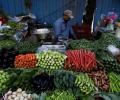
Retail inflation fell to a five-month low of 4.35 per cent in September from 7.27 per cent in the year-ago period as prices of vegetables and other items declined, according to government data released on Tuesday. The moderation in Consumer Price Index-based inflation is in line with the assessment of Reserve Bank Governor Shaktikanta Das who recently projected substantial softening of retail inflation. The CPI inflation was at 5.3 per cent in August and at 7.27 per cent in September 2020.
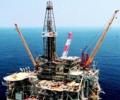
IOC, BPCL and HPCL currently sell petrol at a loss of Rs 6.12 per litre, Rs 4.60 a litre on diesel, Rs 18.42 per litre on PDS kerosene and Rs 265.27 per 14.2-kg LPG cylinder.
India's Oil Minister Murli Deora said a proposal to allow firms to set retail fuel prices based on market prices would be sent to the cabinet for approval within six weeks.
India's Oil Minister Murli Deora said a proposal to allow firms to set retail fuel prices based on market prices would be sent to the cabinet for approval within six weeks.
Indian Oil Corp, the country's largest oil firm, has opened its first petrol station in Mauritius, making it the second country after Sri Lanka where IOC has begun fuel retailing outside India.
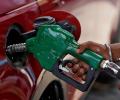
The price of petrol was hiked to Rs 101.39 a litre in Delhi from Rs 101.19 and to Rs 107.47 per litre in Mumbai, according to a price notification of state-owned fuel retailers. Diesel rates went to Rs 89.57 a litre in Delhi and Rs 97.21 in Mumbai.
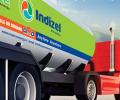
Company will be engaged in the manufacturing, distribution, marketing and retailing of waste to bio-diesel, a non-petroleum based fuel.
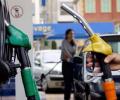
In the first reduction in rates in over a year, petrol price on Wednesday was cut by 18 paise per litre and diesel by 17 paise a litre as international oil prices tumbled to the lowest since early February.
IndianOil would get into retail trade in a big way this year, leveraging on its nation-wide network of petrol stations, as it seeks to make non-fuel business a driver of growth, company officials said on Monday.
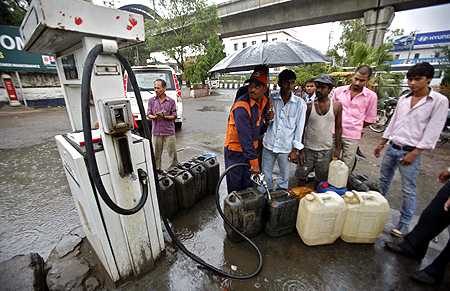
Petrol price was on Saturday cut by Rs 0.50 per litre but there will be no change in rates of diesel.

Petroleum secretary RS Pandey said the ministry explained the revenue losses that state run companies were incurring on sale of petrol, diesel, domestic LPG and kerosene.

Inflation in food articles was at 0.87 per cent in April 2018, as against a deflation of 0.29 per cent in the preceding month.
